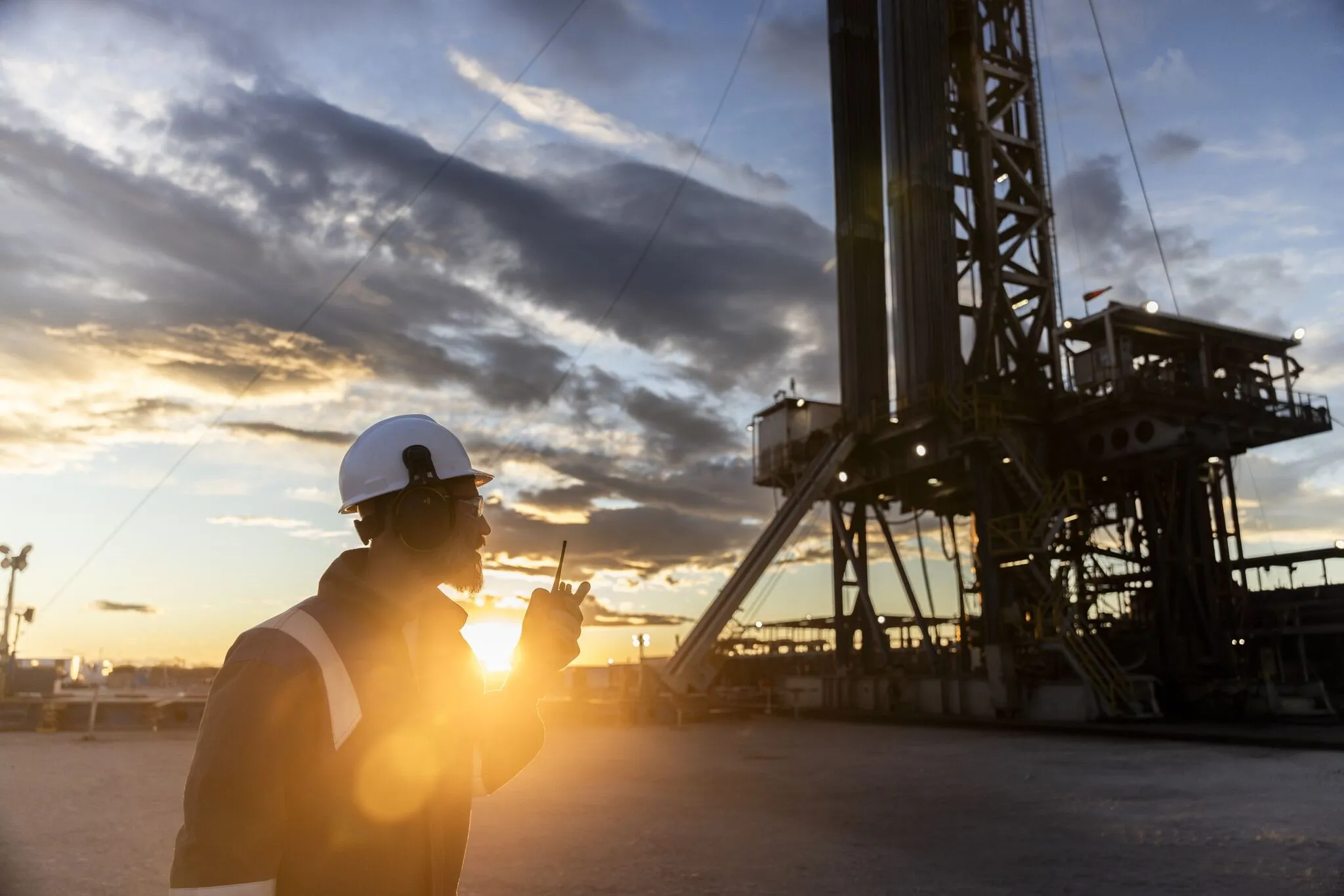
Geonavigation is a well construction and optimization technique that integrates professionals from different disciplines (geology, geophysics, petrophysics, and drilling) with advanced technologies, enabling precision drilling within specific geological targets, such as Vaca Muerta.
Vaca Muerta is a shale formation that can be over 400 meters thick, yet its productivity varies significantly across different layers.
By analyzing geological and petrophysical data, this technique allows the drilling trajectory to be adjusted in real time to remain within the richest rock layers.
01
The position of the drill bit and surrounding rock properties are transmitted in real time to the geonavigation center.
02
Real-time data is continuously analyzed against geological models at the geonavigation center to determine if any adjustments to the drilling path are necessary.
03
Geonavigators remotely instruct the engineers operating the drill bit to make precise trajectory changes to stay within target zones.
Geonavigation ensures the drill bit follows the most productive path, reducing the risk of deviation from areas with the highest concentration of hydrocarbons. In a horizontal well stretching 2,500 meters, even a slight deviation of 0.5° can result in a misalignment of 22 meters.
01
Drilling an unconventional well is the same as drilling a conventional one. Both use the same equipment and require identical environmental permits, which are overseen by the appropriate regulatory authority.
01
Drilling an unconventional well is the same as drilling a conventional one. Both use the same equipment and require identical environmental permits, which are overseen by the appropriate regulatory authority.